Modern IT services encompass the design, development, deployment, and maintenance of digital solutions that support and drive business growth.
Objectives
IT services and digital solutions are often used interchangeably.
- Our objective is to deliver scalable, secure, and efficient technology solutions tailored to each client.
- To provide businesses with reliable systems and tools that support operations, innovation, and long-term growth.
- To act as a trusted technology partner across all stages of digital development.
Relevance
Relevance in IT solutions is the ability to address real business needs and create measurable value. This includes both immediate impact and long-term scalability.
Effective IT solutions combine practical functionality with forward-thinking design.
A solution is considered relevant when it aligns with business goals and improves efficiency, productivity, or customer experience.
Reliability
Reliability ensures that systems perform consistently and as expected. Solutions must be stable, secure, and built using best practices to minimize downtime and risk.
Key aspects of reliability include robustness, security, and accuracy in implementation.
Enhancing Qualitative Characteristics
Scalability
Scalability ensures that systems can grow alongside the business. Whether supporting a startup or an enterprise, solutions should adapt to increasing demands without compromising performance.
Maintainability
Maintainability refers to how easily systems can be updated, improved, and supported over time. Clean architecture and proper documentation are essential for long-term success.
Usability
Usability ensures that systems are intuitive and efficient for end users. Clear interfaces and thoughtful design improve adoption and productivity.
Timeliness
Timeliness means delivering solutions when they are needed. Efficient development processes and agile methodologies ensure rapid delivery without sacrificing quality.
Development Lifecycle
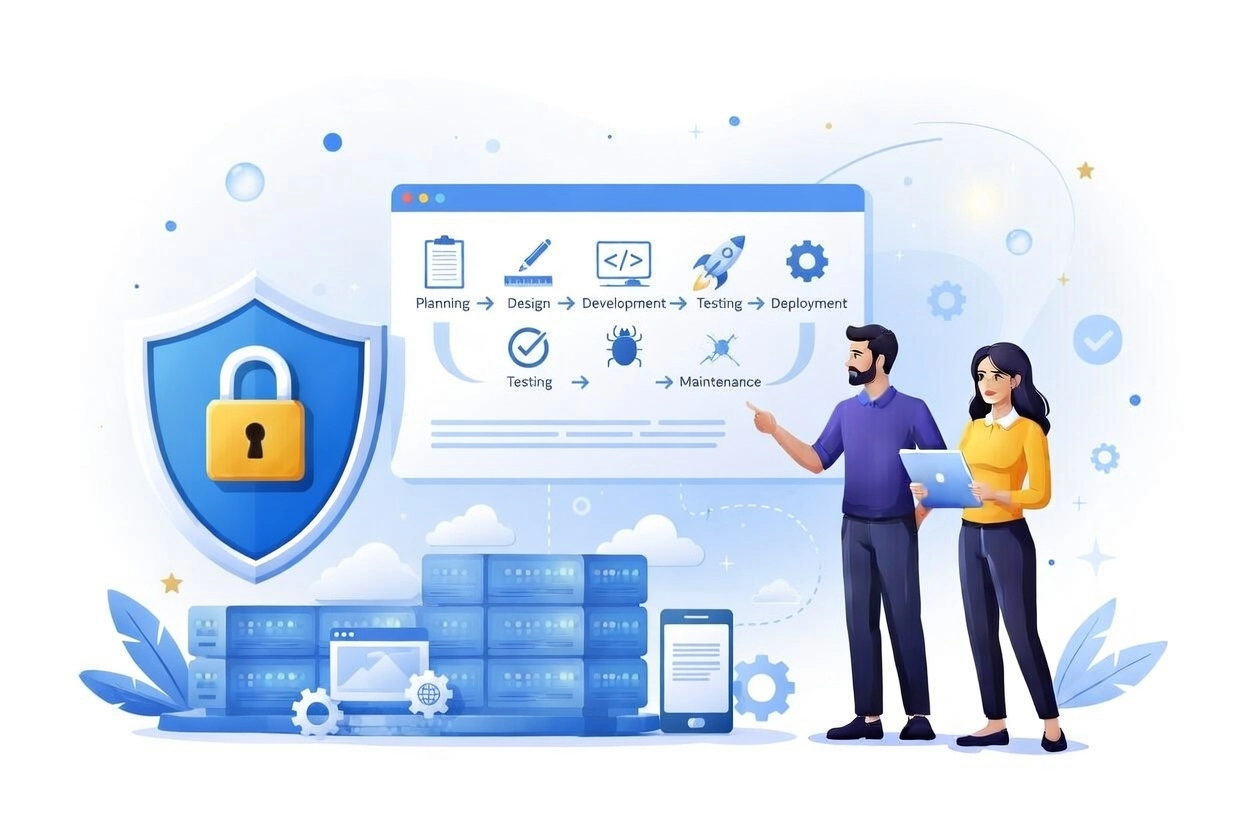
The development lifecycle outlines the process from idea to deployment and ongoing support. A typical workflow includes:
Planning → Design → Development → Testing → Deployment → Maintenance
| Phase | Description | Outcome |
|---|---|---|
| Planning | Requirements gathering | Clear project scope |
| Design | Designing a soultion based on the planning | A clear scope of that is developered |
| Development | Implementation | Functional solution |
| Testing | Test based on the requirements | We test that the developed solution works as intended |
| Deployment | Release | Live system |
Example 1: A small business needs a simple website to present its services. The solution includes a lightweight, fast-loading site with essential pages, contact information, and basic SEO optimization.
- Scope: Informational website
- Technology: Static site generator
- Outcome: Fast, secure, and low-maintenance web presence
Example 2: A growing company requires a custom internal system to manage operations. The solution involves a scalable web application with user authentication, database integration, and automation features.
Important: Solutions are always tailored to the client’s size, needs, and future growth.
Infrastructure & Architecture
A strong technical foundation is essential for any IT solution. This includes infrastructure, integrations, and system design.
- Infrastructure
- cloud hosting
- on-premise environments
- hybrid solutions
- Applications
- web applications
- mobile applications
- APIs and integrations
- Security
- data protection
- access control
- monitoring and compliance
A well-designed architecture ensures performance, security, and flexibility. Whether building a simple website or a complex system, the goal is to create solutions that are robust, maintainable, and aligned with business objectives.