
IT consulting focuses on advising, planning, and guiding organizations in making the right technology decisions to support their business goals.
Objectives
IT consulting and technology advisory services are often closely related.
- To provide expert guidance on technology strategy, architecture, and implementation.
- To help organizations make informed decisions that align IT investments with business objectives.
- To identify opportunities for optimization, innovation, and digital transformation.
Relevance
Relevance in consulting is the ability to understand a client’s unique challenges and provide actionable, value-driven recommendations.
Effective consulting bridges the gap between business needs and technical solutions.
Advice is relevant when it leads to measurable improvements in efficiency, scalability, or competitive advantage.
Trust & Transparency
Trust is fundamental in consulting engagements. Recommendations must be unbiased, clear, and based on proven expertise.
Transparency ensures that clients understand the reasoning behind decisions, including trade-offs, risks, and expected outcomes.
Enhancing Qualitative Characteristics
Strategic Alignment
Strategic alignment ensures that all technology initiatives support the broader business vision. Every recommendation should contribute to long-term success.
Practicality
Practicality focuses on delivering realistic and implementable solutions. Recommendations must consider budget, resources, and organizational maturity.
Knowledge Transfer
Knowledge transfer ensures that clients are empowered to maintain and evolve their systems independently. Documentation and clear communication are key.
Timeliness
Timeliness in consulting means delivering insights when they are most valuable, enabling organizations to act quickly and effectively.
Consulting Process
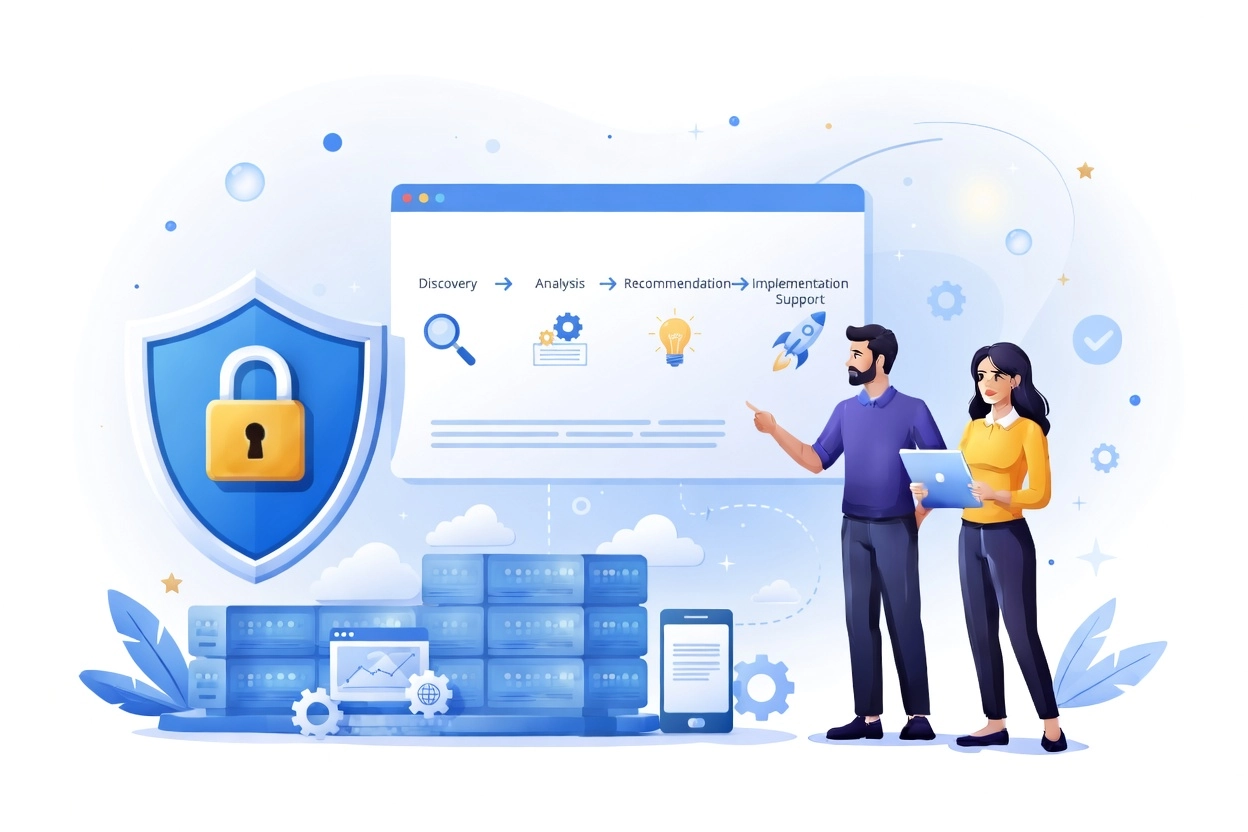
A structured consulting approach ensures consistent and valuable outcomes. A typical engagement includes:
Discovery → Analysis → Recommendation → Implementation Support
| Phase | Description | Outcome |
|---|---|---|
| Discovery | Understanding business needs | Clear objectives |
| Analysis | Evaluating current systems | Identified opportunities |
| Recommendation | Strategic guidance | Actionable roadmap |
Example 1: A company wants to modernize its legacy systems. The consulting process identifies bottlenecks, evaluates technologies, and provides a phased migration plan.
- Focus: System modernization
- Outcome: Improved performance and scalability
Example 2: A startup needs guidance on selecting the right technology stack. Consulting ensures the chosen tools align with future growth and minimize technical debt.
Important: Consulting services are always tailored to the organization’s size, industry, and ambitions.
Areas of Expertise
Consulting services cover a wide range of IT domains, ensuring comprehensive support.
- Strategy
- digital transformation
- IT roadmaps
- technology selection
- Architecture
- system design
- cloud strategy
- integration planning
- Optimization
- performance improvements
- cost optimization
- process automation
A strong consulting partner helps organizations navigate complexity, reduce risk, and make confident technology decisions that drive long-term success.